Adoption of Methane-Reducing Feed Additives
How structured stakeholder engagement and evidence-led design turned fragmented research into industry-ready adoption tools.
SERVICES DELIVERED:
Stakeholder Engagement - Research Produced Materials - Evidence-Led Design - Stakeholder Communications
OUTPUT:
8 stakeholder-ready deliverables
This project moved through a deliberate sequence:
• Structured stakeholder engagement →
• Thematic analysis →
• Framework development →
• Coordinated communications designed materials.
Each stage informed the next. The output results were an integrated suite of materials, built on verified stakeholder input, designed to function across the audiences and channels where adoption decisions actually happen.
CONTEXT AND FINDINGS:
Enteric methane from dairy cattle is among the most scrutinized emissions in agricultural sustainability. Regulatory pressure is intensifying, investor expectations are rising, and co-ops face growing demands from downstream customers to demonstrate credible climate progress.
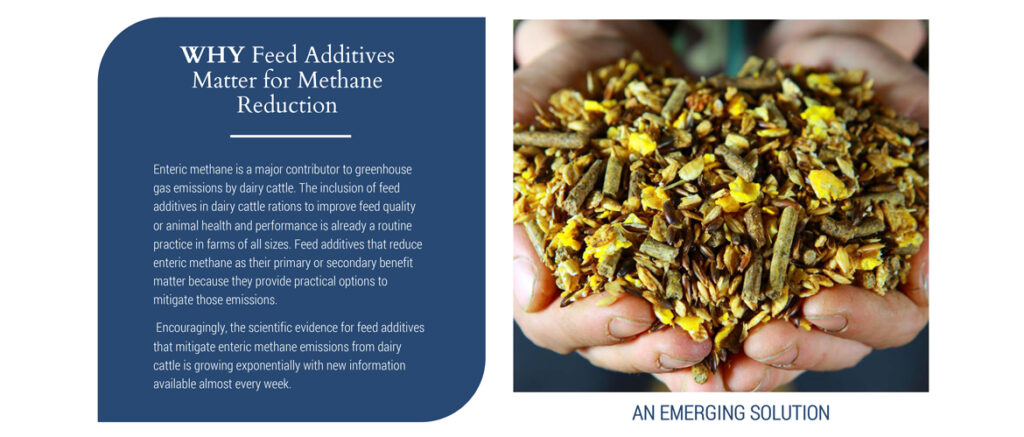
Feed additives represent one of the most scientifically promising mitigation tools available. Despite a growing body of research, on-farm adoption remained limited. Although there was a considerable amount of data available, the absence of a shared, structured framework that stakeholders could actually use was missing.
The Main Problem: Fragmented criteria and stalled decisions
When evaluating a feed additive, a dairy farmer and a cooperative sustainability director ask fundamentally different questions. Without a common evaluation framework, those conversations produced inconsistency rather than alignment. Research outputs sat in technical documents that few outside the lab could parse. There was a disconnect between what scientists knew and what producers could act on.
We identified three simultaneously compounding barriers:
1. No standardized framework: Stakeholders applied different, often conflicting, criteria when assessing additive performance, cost, and scalability.
2. Farmer-facing guidance was absent: Producers lacked practical decision tools suited to their operational context.
3. Complex data had not been translated: Research findings existed in formats designed for scientific audiences, not supply chain decision-makers.
OUR SOLUTION APPROACH
Structured engagement before design
We began with the stakeholders, as a series of facilitated focus group sessions bringing together farmers, cooperative representatives, research leads, and industry organizations. The objective was alignment and highlighting the criteria that actually mattered to the people who would use the tools.
Facilitation followed a structured dialogue model grounded in consensus-building. Sessions were designed to produce conversational thematic outputs. Themes derived from structured engagement become defensible foundations for the tools built on top of them.
Thematic analysis as source material
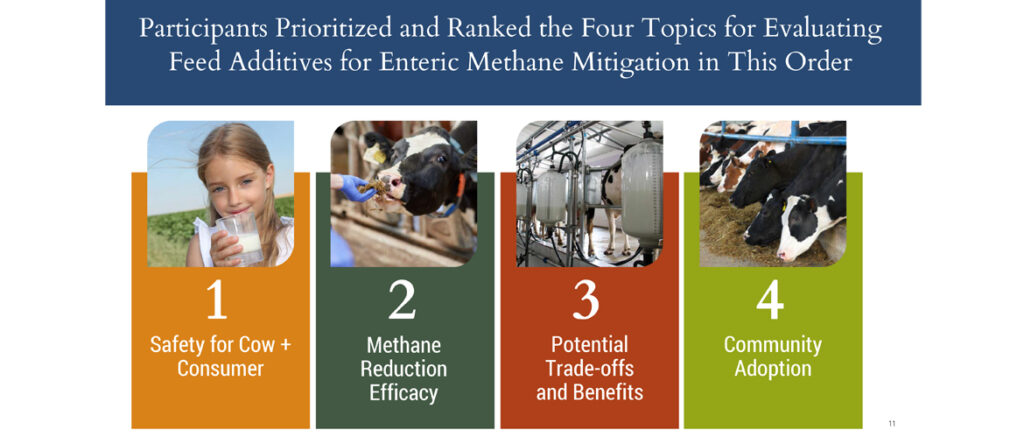
Session outputs were analyzed to identify decision drivers, common concerns, and trade-off patterns across stakeholder groups. This thematic layer became the content architecture for every deliverable that followed — ensuring that the evaluation criteria embedded in tools reflected what stakeholders had confirmed, not what researchers assumed they needed.
Coordinated suite of materials derived from analysis
The research translated into eight coordinated deliverables, each designed for a distinct function and audience:
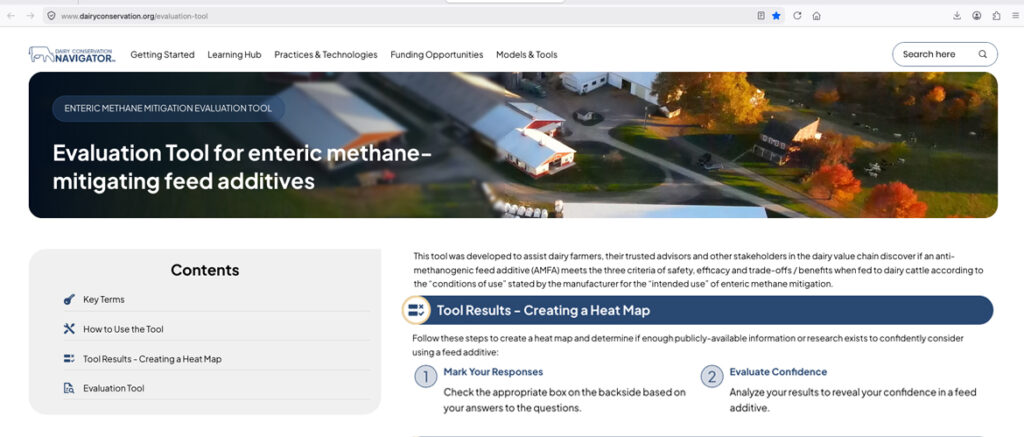
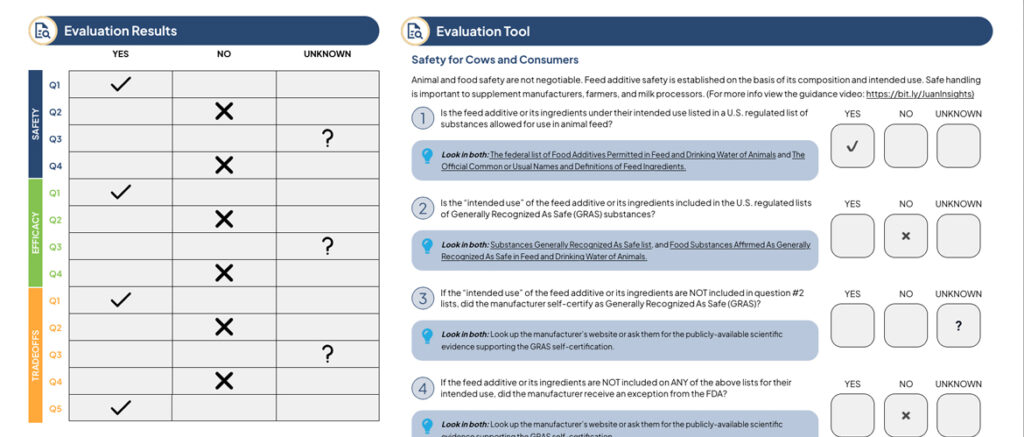
• Feed additive evaluation tool — a structured instrument for assessing performance, cost, and applicability
• Performance heat map — a visual layer for comparing trade-offs across additive options
• Guidance document — a framework for adoption, structured for both practitioner and policy audiences
• Factsheets — simplified, audience-specific summaries for faster stakeholder communication
• Infographics — data-led visual assets translating technical findings into accessible formats
• Social media content — channel-ready materials aligned to the broader narrative
• Media briefings and articles — formatted for journalist and trade publication audiences
• Industry presentations — materials delivered at the Sustainable Agriculture Summit and World Dairy Expo
RESULTS
The project produced a shift from parallel, uncoordinated assessments of feed additives toward a shared evaluation framework with documented stakeholder buy-in.
Impact was defined by four outcomes:
1. Alignment & Standardization: A single, validated framework replaced conflicting criteria. Stakeholders across the supply chain now assess additives against consistent performance and trade-off benchmarks.
2. Enhanced Communication Capacity: Complex research findings moved from technical documents into visual, stakeholder-ready formats that supported both internal alignment and external engagement.
3. Improved Decision-Making: Farmers and co-op advisors accessed practical tools calibrated to their decision context.
4. Reduced Friction on Adoption Pathways: Clearer criteria and better communication tools shortened the distance between research validation and on-farm consideration — building a more durable foundation for scaling methane mitigation.